Sunday, November 12, 2006

Mad Dog


Mad Dog
Originally uploaded by bokchoyboy.
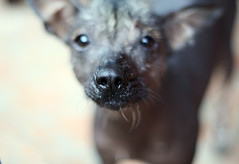
We saw this dog jumping around on the table of a restaurant. There were a few people there watching it and it seem to love the attention. Well, I tried to get close to it to take a picture of it. It stopped started at me and started growling. I guess I interupted it's show!

Cuy


Cuy
Originally uploaded by bokchoyboy.
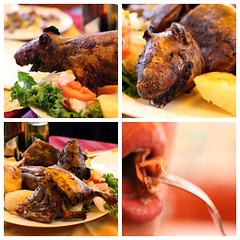
Okay so as far as food goes, this is what we came to try. Cuy, otherwise know as guinea pig to most of us, is a national delicacy in Peru. It is usually eaten during holidays. We tought it tasted like chicken with a slight but strange fishy aftertaste. The one we tried was very tough, probably an older guinea pig.

Thursday, November 09, 2006

Gelato in Peru!


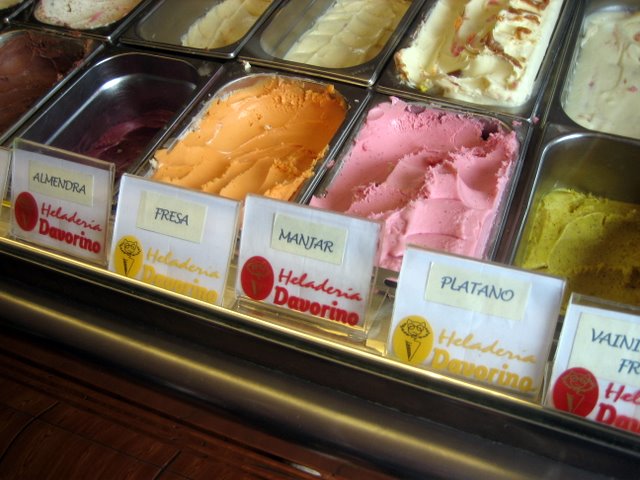
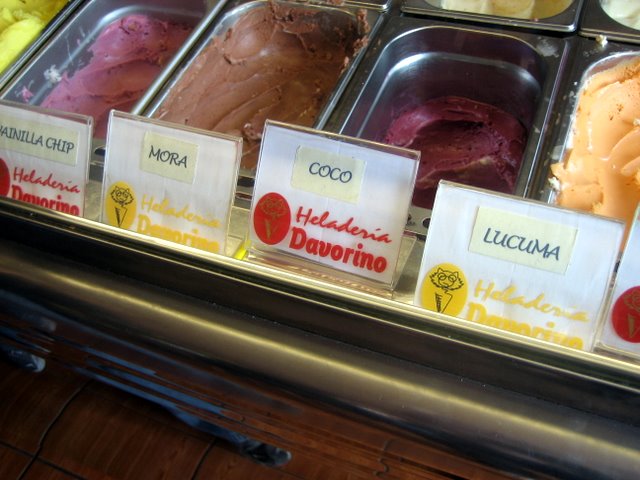
I was surprised to find gelato in Cuzco. The place is called Davorino and they had some interesting flavors. Can you recognize the flavors? I tried the plantano and the cherimoya. I liked the cherimoya.

 Posted by Picasa

Futbol!

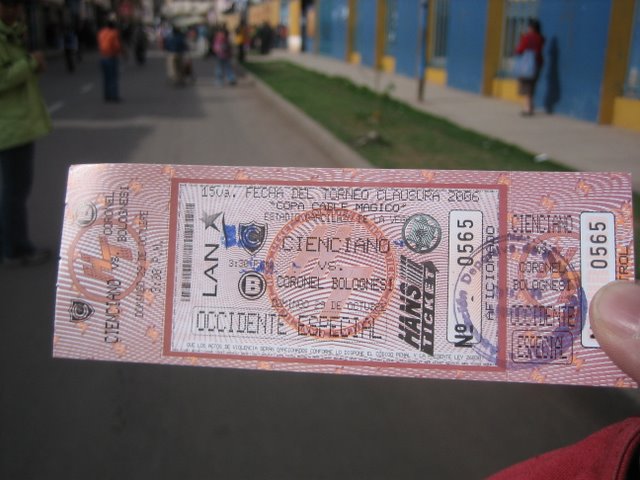
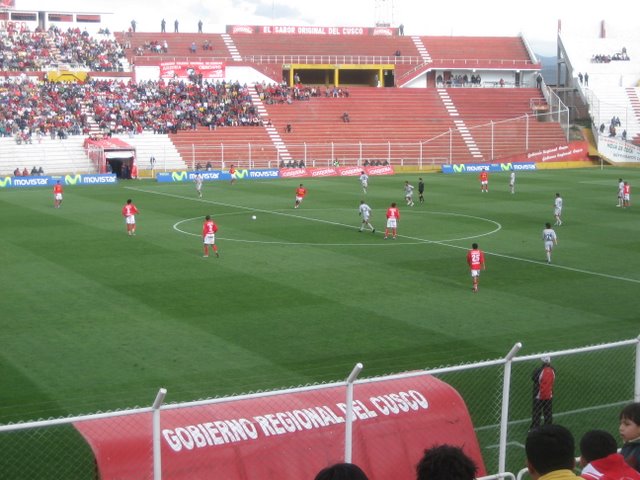
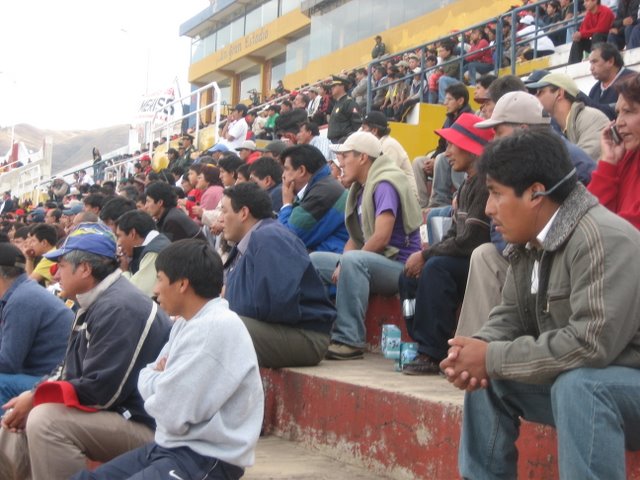
So BHC convinced me to go to a soccer game while in Cuzco. I was hesitant because my stomach wasn't feeling so hot. I was afraid I would be in a need of a bathroom while at the game. I didn't tell her that. Well I am glad that she convinced me because it was a lot of fun. It was cool to be at a sporting event in a foreign country. This was a regional game between the team from Cuzco and another regional team. The fans were so passionate. The two girls next to us were screaming at the opponent and they were ruthless and crude with their comments! The Cuzco team was much better than the opposition. Go Cuzco!

 Posted by Picasa

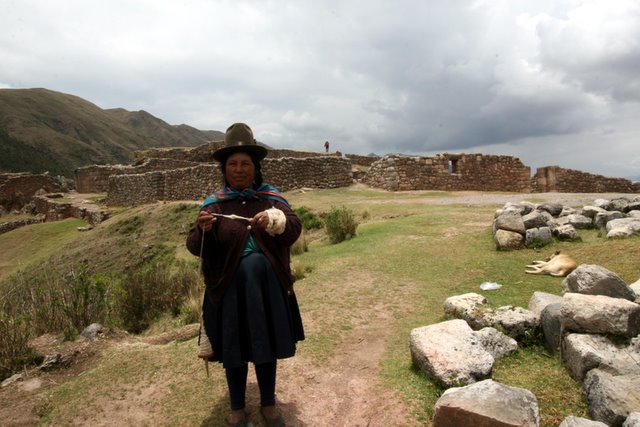
Pucapucara

We got here on a horseback ride and without a guide to tell us what we were looking at. Without any background this place didn't hold that much interest. Luckily there was a man there who offered to explain the place to us for 10 soles ($3 USD).

The significance of this place to the Incans was huge. This is where they trained all the future leader for the empire. A select number of students (usually the oldest son of selected families) came here to learn how to be leaders in their society. They were taught spirituality, leadership and cultural things like the Incan ways of building a city.

The training is not without it's perils for the student. They had to go through this ritual where they fast for 30 days. Some made it, some did not. Posted by Picasa

Chifa

"Chifa (from the mandarin words "chi fan", meaning 'to eat rice') is the Peruvian term for Chinese food (or for a Chinese restaurant). In the 150 years since its arrival in Peru, the Chinese Peruvian culture has revolutionized Peruvian cuisine, gaining international recognition from those who have had the opportunity to sample it while visiting Peru.
Chifa reflects a fusion by Chinese Peruvians of the products that the Chinese brought with them to those that they found in Peru, and later cultivated themselves. Even some creole dishes such as tacu-tacu, lomo saltado, and arroz chaufa were influenced by the Chinese.
In downtown Lima, on Capón Street, is the barrio chino (Chinatown). The great variety of savory and sweet dishes there, with different types of meats, vegetables, and soups, created a new culinary alternative for Peruvians." Wikipedia

We tried the Chifa food in Cuzco, not all that but edible. Posted by Picasa

Circular Terraces of Moray

These Circular Terraces of Moray are located in the Sacred Valley near Cuzco. The Incans used these terraces for agricultural purposes. This particular loacation was used to test out different crops and perfect their farming. So if I understood our guide properly, this was something like a test site. Each circle had a different micro-climate.

I actually got sick at the salt pond and by the time I got here the only picture I could take was the one from up top, I didn't go down to walk the circles. BHC did go down with the guide and laid in the the center where there was suppposed to be a lot of energy according to the Incans. Posted by Picasa

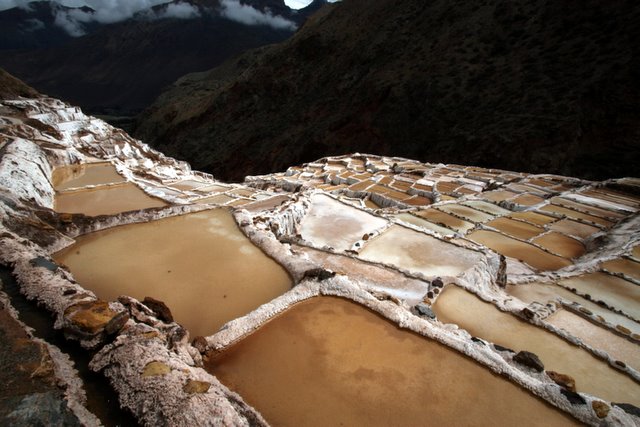
Salt Ponds at Maras

Located on the Qaqawiñay Mountains, these salt mines have been used since the Incan times. The source of the salt comes from a naturally briny spring that is then irrigated to all the salt ponds. Each pond is owned by a different family. During the rainy season the ponds will take on a brownish hue due to the run off from the soil but once the rainy season stops, the ponds are white. Posted by Picasa

Wednesday, November 08, 2006

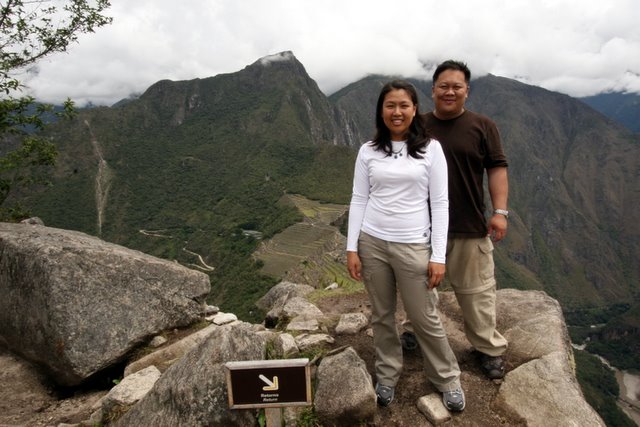
At the Top!

Okay, finally at the top of Wyna Picchu! Posted by Picasa

Almost at the Top

Almost at the top of Wyna Picchu and I started getting cramps in both legs! You are looking at a picture of Machu Picchu. Doesn't that look small?!?! We are pretty high up Wyna Picchu at this point. Posted by Picasa

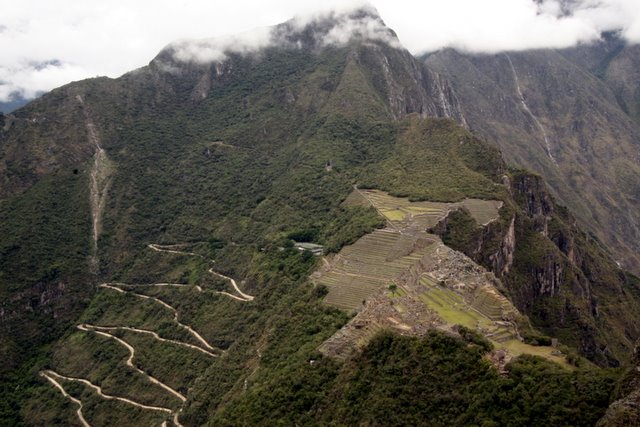
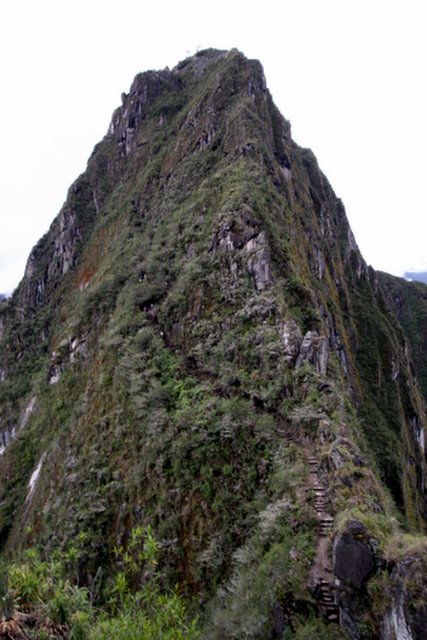
This is Wyna Picchu. We hiked up this while visiting Machu Picchu. If you look closely you can see tiny specs that are supposed to be people. Gives you a perspective of the size of this peak. Posted by Picasa

Happy to Be Here!

This is our "I can't believe we are in Machu Picchu" look! Posted by Picasa

okay one more... Posted by Picasa

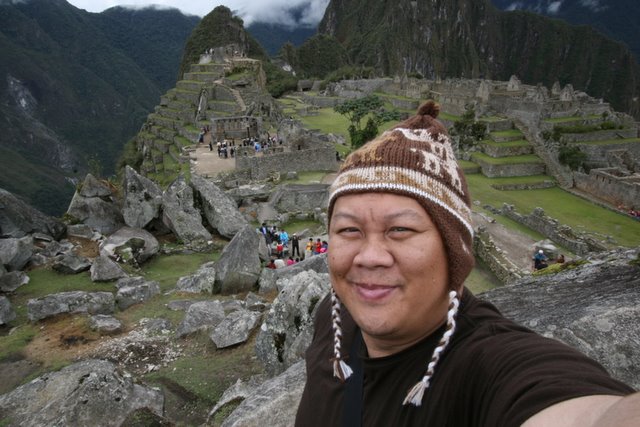
Me and MP

me, my hat, and Machu Picchu! See that peak behind me? That's Wyna Picchu. We climbed that! More on that later! Posted by Picasa

Llamas of Machu Picchu

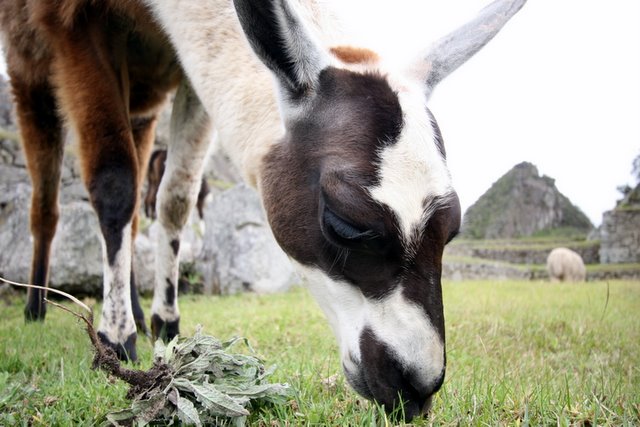
After Machu Picchu was discovered and cleared of all the vegetation, at the suggestion of visitors, grass was planted in the clearing to add color to the area. Also at the suggestion of visitors, llamas were imported here to add to the ambiance. A side benefit was that the llamas kept the grass from over growing and kept it nice and trimmed. Posted by Picasa

Mummy's Lair

A mummy was discovered in this tomb in 1992. Probably a high priest at Machu Picchu, the mummy was found with many artifacts, unlooted. Posted by Picasa

Mirrors

These two cylindrical shapes were carved into the top of the rocks. They have a shallow top that retains water which was used by the Incans as a mirror to view the sun, moon and the stars. Posted by Picasa

Energy Stone

This slab of rock is located at the highest point in Machu Picchu. I believe this was called an energy rock. It contained quartz in it and retained heat through out the day so when the Incans touched it, they felt that it revitalized them with energy. Posted by Picasa

Me and Machu Picchu

Me overlooking part of Machu Picchu from it's highest spot. Posted by Picasa

Tuesday, November 07, 2006

Stone Model

It's a little hard to tell but there is a stone in the foreground that was carved by the Incans to resemble the mountains behind it, from the peaks to the valleys. It was a model of the area. Posted by Picasa

Waiting room

Our guide told us that this room was used as a waiting room by priests, royalty, and their family as a waiting room before ceremonies. Each of these niches that you are looking at were possible used for chanting. We put our heads in the niches and talked creating an echo with in the hole. Each hole has a different pitch. This is also an example of the Imerial Inca building style. Posted by Picasa

Incan Symbol

I got the impression that the Incans ideology tied very closely with astrology, the sun and the moon. Here the stone is the middle, the one with step like sides, is no exception. When the sunlight hits this rock at a certain time of the year the shadow along with the rock forms the Inca Cross, ChakanaPosted by Picasa

Monday, November 06, 2006

The Incans used three main type of building style. The first one is the lowest form where the stones aren't perfectly aligned and there is mortar in between the stones. The second type, the Incans used stones that fit perfectly with each other and didn't use mortar. Then the last one, called Imperial Inca is similar to the second style but the stones are roughly the same size as well. The Imperial Inca style was reserved for the most important and sacred buildlings.

What you are looking at is a ceramonial building that uses the Imperial Inca style of building, The stone slab in the middle of the building was used for sacrificing young animals. Our guide was telling us that the Spaniards who invaded the Incans mis-understood that the Incans sacrificed young animals like llamas and thought that they sacrificed young human virgins. Incans did not do human sacrifices contrary to popular beliefs. Or so says our guide. Posted by Picasa

Sun Gate

This is me at the Sun Gate in Machu Picchu. The Sun Gate is the point where the Inca Trails enters into Machu Picchu. Posted by Picasa

Friday, November 03, 2006

Machu Picchu

So on the 4th day of the trip we finally made it to the highlight of the trip, Machu Picchu! It was an absolutely spectacular sight! It started of completely foggy to the point where you couldn't see anything but soon after we got there it cleared up and we were treated to this moody and wonderful shot.

Machu Picchu is actually the name of the mountain that this archelogical sight sits on. The original name the Incans gave it is lost. It is not a city where people inhabit contrary to popular belief. It is a ceremonial place where people travel to from across the Incan empire. There are living quarters where families live when travelling but are not permenant living quarters. Posted by Picasa

Inca Kola is a soda that's more popular than Coca Cola in Peru. It is a bright yellow liquid that has a tutti fuity taste. It kinda grew on me. Something I found out later on the trip was that Coca Cola eventually bought Inca Kola! Talk about getting rid of your competition! I also found out that the bottled water that I was drinking was bottled by...guess who? Yup, Coca Cola! Posted by Picasa

Streets of Cuzco

Here are some images from the streets of Cuzco. There's a lot of character in the buildings. You can see the wear and tear. A lot of the buildings I looked at and the one being build in the countryside are made with mud and straw. Beautiful place to walk around and absorb the atmosphere.

The biggest drawback visiting a place like this is the smog that the cars kick up. It's really bad. Everytime I walked around for extended periods of time, I would start to feel queasy.


 Posted by Picasa

Thursday, November 02, 2006

Pizza!

So while researching Peru we discovered that there is supposed to be some good pizza there. When we got there we were surprised to see so many places that served pizza! Not only pizza but lots of gringo food. Chez-Maggy is one of the places we tried pizza. Must say, not too bad!

We tried the Maggy Special which was topped with sausage, ham, scrambled eggs and banana. Strange and unusual combination but it kinda worked. We both liked it. Posted by Picasa